%20(1).png)


Top Rated Home Tutors for Kindergarten: Our Top Picks

Why the Right Reading Tutor in Kindergarten Can Change Everything

Reading tutors for kindergarten can make a real difference during one of the most critical windows in a child's academic life. Kindergarten is when foundational literacy skills — letter recognition, phonemic awareness, and early decoding — are built. Get this stage right, and everything that follows gets easier.
Here are the general formats parents should know about:
Tutoring Format | Best For | Typical Cost |
Online 1:1 | Structured literacy & Science of Reading | $35–$60/hr |
In-Person / In-Home | Multisensory play & local curriculum | $60–$150+/hr |
Specialized Literacy | Neurodivergent learners & OG methods | Premium pricing |
Non-Profit / Free | Families needing financial assistance | Free |
Kindergarten may feel early to think about tutoring — but research consistently shows that early literacy gaps compound quickly. A child who struggles with phonemic awareness at 5 is often the same child playing catch-up in 3rd grade reading comprehension.
The good news? Targeted 1:1 reading support at this age works. Data from structured literacy programs shows that students who receive individualized instruction can grow three times faster than peers in the same classroom without support.
I'm Bige Doruk, founder of Bright Kids, where I've spent nearly two decades supporting over 10,000 students in early literacy, foundational skill-building, and competitive school preparation — including helping kindergartners connect with the right reading tutors for kindergarten to set them up for long-term success. In this guide, I'll walk you through exactly what to look for, what to expect, and how to evaluate the best options for your child.
Identifying the Need for Early Literacy Support
It can be difficult for parents to determine if their child is experiencing "normal" developmental variation or if they are genuinely falling behind. In the academic environments of New York City, Manhattan, and Brooklyn, the expectations for a five-year-old have shifted significantly. Many skills once reserved for first grade are now part of the standard kindergarten curriculum.

If your child is showing signs of academic frustration, it might be time to consider professional support. Common red flags include:
Difficulty with Letter Recognition: By the middle of the school year, most kindergartners should be able to recognize and name all uppercase and lowercase letters. If they are consistently confusing letters or unable to name them, they may need targeted help.
Phonemic Awareness Gaps: This is the ability to hear and manipulate individual sounds in words. If your child cannot rhyme simple words (like "cat" and "hat") or struggle to identify the first sound in a word, these are key indicators.
Avoidance Tactics: Does your child suddenly need a snack, a nap, or a toy the moment a book comes out? Frustration often manifests as avoidance.
Teacher Feedback: Educators in NYC public and private schools are trained to spot early literacy gaps. If a teacher suggests your child is "falling behind the rest of the class," it is a call to action.
At Bright Kids, we believe in proactive intervention. You can learn more about how tailored support helps in our More info about tutoring for kindergartners guide. Early support isn't just about academics; it’s about preserving a child’s confidence before they begin to label themselves as "bad at reading."
Core Competencies Taught by Reading Tutors for Kindergarten
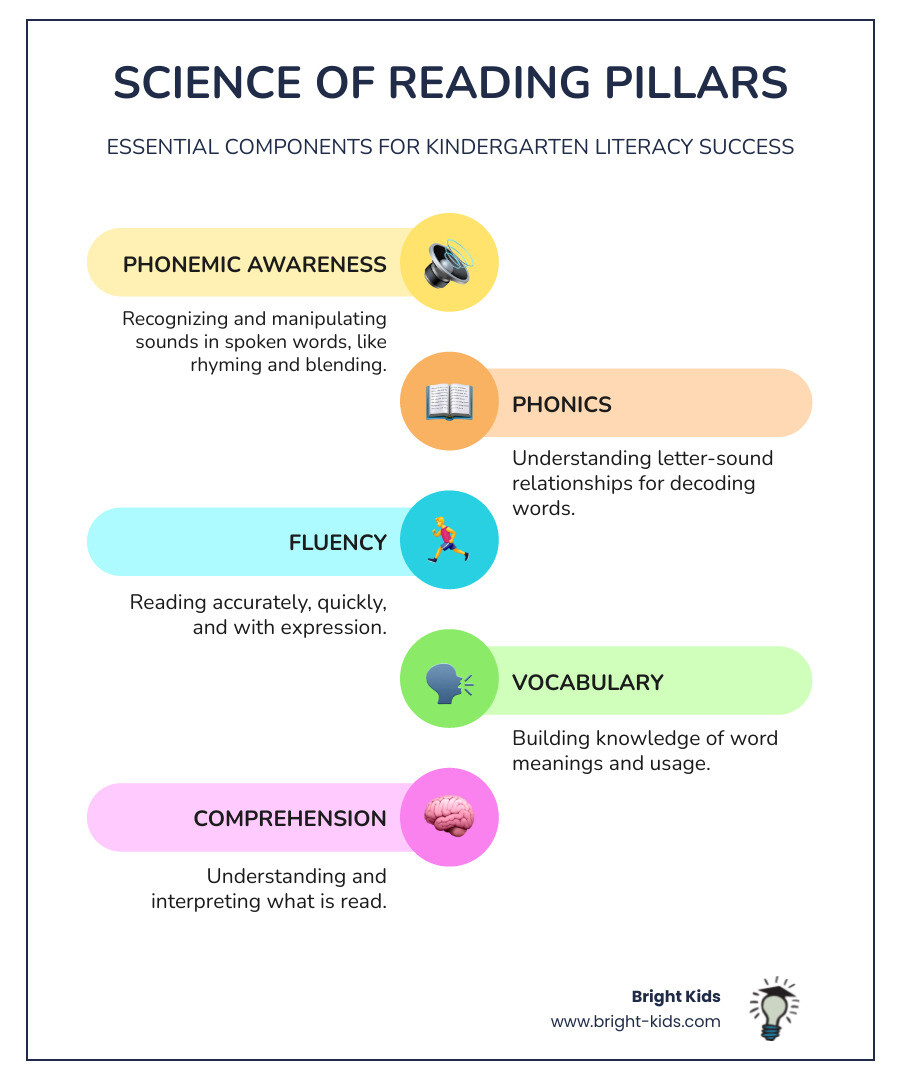
When you hire reading tutors for kindergarten, they don't just "read books" with your child. High-quality tutoring follows a Structured Literacy approach grounded in the Science of Reading. This research-backed methodology ensures that instruction is explicit, systematic, and multisensory.
In our Subject tutoring services, we emphasize a few core competencies that every kindergarten program should cover:
Print Awareness: Understanding how to track words from left to right and top to bottom.
Letter-Sound Relationships: Connecting the visual shape of a letter to its specific sound (phonics).
Decoding Strategies: Learning how to "blend" sounds together to read simple one-syllable words rather than guessing based on pictures.
Orton-Gillingham Methods: Many specialists use this multisensory approach, which engages visual, auditory, and kinesthetic pathways to help the brain retain language structures.
Developing Phonemic Awareness with Reading Tutors for Kindergarten
Phonemic awareness is the single most important predictor of future reading success. It is an auditory skill—it can actually be done in the dark! Kindergarten reading specialists focus on:
Sound Identification: Recognizing the beginning, middle, and ending sounds in words.
Oral Blending: Taking individual sounds (/c/ /a/ /t/) and pushing them together to say the word ("cat").
Rhyming and Alliteration: Playing with the rhythm of language to build auditory processing skills.
Targeted Exercises: Using tools like Elkonin boxes or colored tokens to represent sounds helps young learners "see" the sounds they are hearing.
Improving Fluency with Reading Tutors for Kindergarten
Fluency is the ability to read text accurately, quickly, and with proper expression. While full fluency is a longer-term goal, kindergarten is where the "speed" of recognition begins.
Sight Words: Tutors help children build a "sight vocabulary" of high-frequency words (like "the," "is," and "of") that don't always follow standard phonetic rules.
Word Tracking: Using a finger or a tracking tool to ensure the child isn't skipping lines or losing their place.
Decodable Texts: These are books specifically designed to include only the phonics rules the child has already learned. This builds immediate success and prevents the habit of guessing.
The Data on Growth: Research from the International Dyslexia Association shows that 1:1 structured literacy can lead to a 152% boost in oral fluency and an 86% boost in word fluency in just a few months. Overall, 88% of students in these data-driven programs demonstrate significant growth.
Comparing Online vs. In-Person Tutoring Models
In 2026, parents in the New York metro area and Connecticut have more choices than ever between traditional in-home sessions and sophisticated online platforms. Both have unique benefits.
Feature | Online 1:1 Tutoring | In-Person / In-Home Tutoring |
Convenience | High; no travel for parent or tutor. | Moderate; requires a tidy home space. |
Engagement | High through interactive digital tools. | High through physical, multisensory play. |
Cost | Often more affordable ($20–$55/hr). | Generally higher ($55–$150+/hr in NYC). |
Specialization | Access to global experts (e.g., Fulbright scholars). | Deep local knowledge of NYC school curricula. |
Flexibility | Easy to schedule short, frequent sessions. | Best for building deep social-emotional bonds. |
Online tutoring has evolved significantly. Platforms now use web-based apps designed to replicate the in-person experience, featuring digital whiteboards and shared reading screens. This is particularly effective for kindergarteners who are already tech-savvy. However, for neurodivergent learners or children who struggle with screen focus, the physical presence of a specialist in your Manhattan or Brooklyn home can be invaluable. In-person tutors often use "play-based" learning, incorporating games and real-world objects to keep sessions joyful.
Frequently Asked Questions about Kindergarten Literacy
How much do reading tutors for kindergarten cost in 2026?
As of March 2026, the average rate for a reading tutor is approximately $22.30 per hour based on national averages. However, in high-demand areas like New York City, Long Island, and Connecticut, prices vary based on the tutor's credentials:
College Students/General Tutors: $25–$40 per hour.
Certified Teachers (NYS Certified): $60–$100 per hour.
Literacy Specialists (Masters in Ed/OG Certified): $125–$250+ per hour.
Factors influencing price include the tutor's years of experience, specialized certifications (like Wilson or Orton-Gillingham), and whether the sessions are in-person or virtual.
What qualifications should a kindergarten reading specialist have?
When searching for reading tutors for kindergarten, don't just look for someone who "likes kids." Look for these specific credentials:
Educational Background: A Bachelor’s or Master’s degree in Education (B.Ed or M.Ed).
Certifications: NYS certification in Early Childhood Education or as a Reading Specialist.
Relevant Experience: Look for tutors with at least 3–5 years of classroom experience. They will understand the Common Core standards and the specific benchmarks your child needs to hit.
Ratings: When evaluating independent tutors, look for an average star rating of 4.7 or higher and read the testimonials carefully to see if they have worked with 5-year-olds specifically.
How quickly can parents expect to see results?
While every child is different, data-driven programs show impressive timelines. For example, structured literacy lessons often result in an average of 47% growth in foundational skills. Many parents see a shift in "reading confidence" within just 3 to 5 sessions. For significant academic gains—such as moving up a reading level—parents should typically commit to 2 sessions per week for at least 3 to 6 months. Consistent sessions are the key to moving from "struggling" to "fluent."
Conclusion
Finding the right reading tutors for kindergarten is one of the best investments you can make in your child's future. Whether you choose a high-tech online platform or an expert in-home specialist in Brooklyn or Manhattan, the goal remains the same: building a confident, capable reader who loves to learn.
At Bright Kids, we specialize in more than just basic tutoring. With a 90%+ student admission rate to top schools over the past 17 years, we understand the competitive landscape of New York education. We provide personalized diagnostics to identify exactly where your child stands and offer Gifted and Talented preparation to help them excel.
If you are ready to give your child the foundational skills they need to flourish, explore our Academic Enrichment Tutoring or contact us today to schedule a diagnostic. Let's turn those "early red flags" into a lifelong love of reading.



Comments